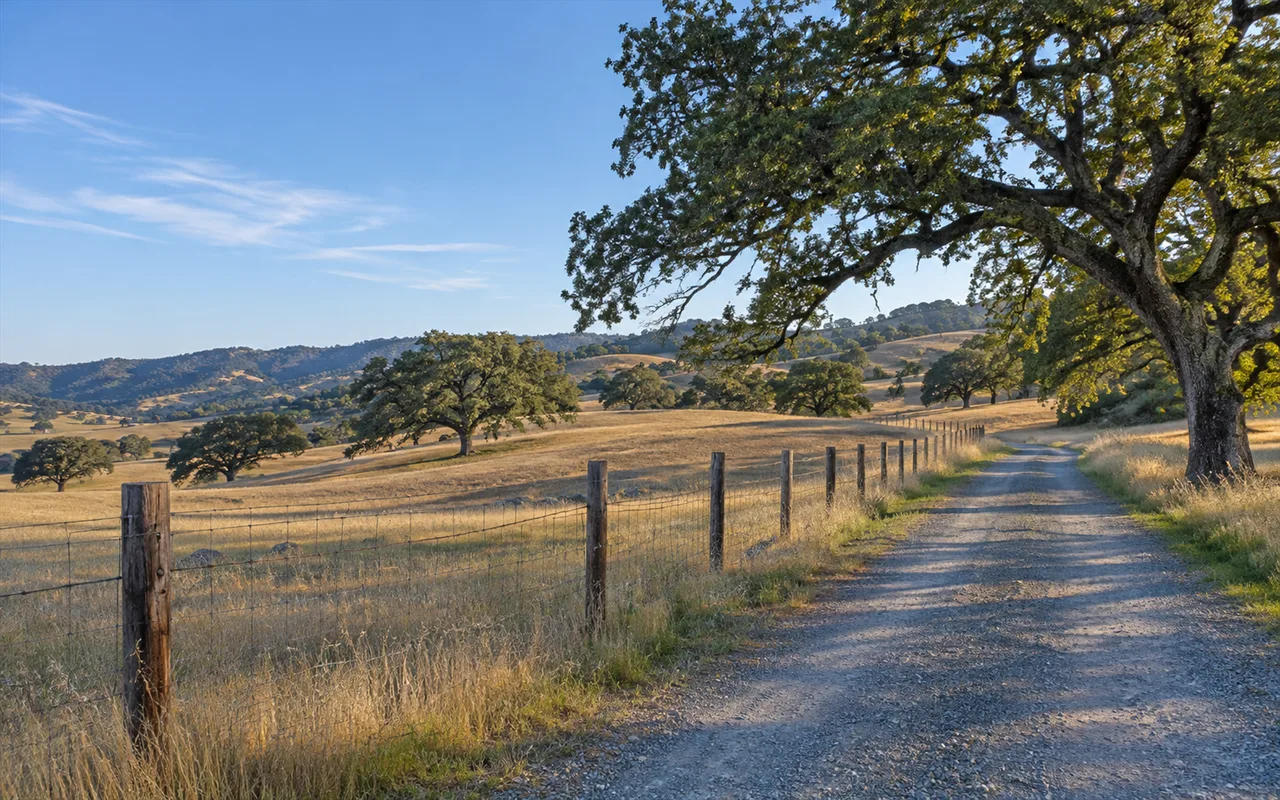
A rural parcel can sit on the market for months because banks are slow to lend on vacant land. A buyer with a down payment and steady income still cannot close.
One answer is to let the seller act as the lender. In a land contract, the buyer takes possession and pays the seller in installments, and the seller keeps the deed until the last payment is made.
The arrangement is also called a contract for deed or an installment land contract. California law calls it a real property sales contract and sets rules for it in the Civil Code.
It can work for both sides. It also leaves the buyer holding something less than ownership for years, and that is the part to understand before signing.
What a land contract is
Under Civil Code section 2985, a real property sales contract is an agreement to convey title once the conditions in the contract are met, where title does not have to pass within one year of signing.1
Every land contract sets the same basic terms:
- the price and the down payment,
- the interest rate and the monthly payment,
- the term, often with a balloon payment at the end,
- who pays property taxes and insurance, and
- when the deed passes to the buyer.
While the buyer is paying, the buyer has the right to use the land and to receive the deed on completion. The seller keeps legal title, which serves as the security for the balance owed.
How the numbers can work
Take an illustration. A seller lists a 10-acre parcel for $240,000. The buyer puts down $24,000, and the seller finances $216,000 at 7 percent, amortized over 10 years.
The monthly payment is about $2,508. The contract comes due at the end of year five, when about $126,650 is still owed. The buyer pays that balance from savings or refinances it with a lender, and the seller then deeds the land to the buyer.
The balloon is where many land contracts are tested. A buyer who cannot pay or refinance on the due date is in default, however faithfully the monthly payments were made.
How California treats land contracts
Land contracts are common in some states. In California they are the exception. According to the law firm SS&R Law Corporation, “The overwhelming majority of secured sales of real estate in California utilize the Deed of Trust method,” with contracts for deed used in unusual situations where the seller wants to remain on title.2
In the usual California structure, the seller deeds the land to the buyer at closing and carries a promissory note secured by a deed of trust. If payments stop, the seller forecloses.
Under a land contract, a seller may expect to cancel the contract and keep both the land and the payments. California courts have resisted that result. In MacFadden v. Walker (1971), the California Supreme Court held that “the policy against forfeitures precludes denying the right to specific performance” to a buyer who had paid a substantial part of the price, despite a willful default.3 The same firm summarizes a later decision, Petersen v. Hartell (1985), as holding that “even willfully defaulting vendees will be awarded specific performance in proper cases.”2
In California, a land contract gives the seller less certainty than its wording suggests, and the buyer more protection, but only through a court.
What the Civil Code requires
California adds several rules of its own:
- Contents. The contract must state the number of years needed to complete payment and the basis of the tax estimate.4
- Taxes and insurance. A seller who collects monthly amounts for taxes and insurance must hold them in trust for that purpose.5
- The seller’s own loan. A seller who receives a buyer’s payment while a payment on the seller’s own loan against the property is due, and uses the money for something else, commits a public offense.6
- New borrowing. If the contract is not recorded, a seller may not encumber the property beyond the amount still due under the contract without the parties’ written consent.7
- Contract and land move together. The owner may not transfer the land without assigning the contract, or the contract without the land.8
- Prepayment. On a subdivided residential lot with a dwelling for up to four families, the buyer may prepay. The seller may bar prepayment only for the first 12 months, and a waiver of the right is void.9
The risks for a buyer
- The deed stays with the seller. A seller’s death, divorce, bankruptcy or judgment creditors can complicate the path to the deed.
- The seller’s loan. A lender with a loan against the land ranks ahead of the buyer if the seller stops paying it.
- The balloon. The final payment must be paid or refinanced on time.
- Improvements. According to the same firm, improvements a buyer makes “may be lost if the buyer defaults on the contract.”2
- An unrecorded contract. The firm advises that the buyer “should record the contract for deed with the county recorder where the land is located,” because third parties who rely on recorded title may otherwise take ahead of the buyer.2
What to agree in writing
- A title report and title insurance for the buyer’s interest.
- Recording of the contract, or a memorandum of it.
- Who pays taxes and insurance, and proof of payment.
- The balance and terms of any loan the seller has on the land.
- Notice and a cure period before any default.
- What happens to improvements if the contract ends early.
- Prepayment rights, the deed’s timing and who pays the transfer costs.
A land contract is only as safe as what is recorded, what is insured and what the contract says happens when a payment is missed.
Your next step
If you are weighing a land contract on a California parcel, as buyer or seller, compare it with a seller carryback secured by a deed of trust before you sign. Order a title report, confirm whether the seller has a loan on the land, and have a real estate attorney review the default and cure terms. Other pieces in this series cover California rules that change how property is bought, held and sold.
Frequently asked questions
What is the biggest risk of a land contract for a buyer?
The seller keeps the deed until the last payment. A seller’s death, bankruptcy or unpaid loan on the land can complicate the buyer’s path to ownership, and the balloon payment must be paid or refinanced on time.
How long does a land contract last?
Can a California seller keep the payments if the buyer defaults?
Not automatically. In MacFadden v. Walker (1971), the California Supreme Court held that the policy against forfeitures can allow a buyer who has paid a substantial part of the price to complete the purchase despite a default.3 The outcome depends on the facts, so speak with a real estate attorney.
How is a land contract different from a deed of trust?
With a deed of trust, the buyer receives the deed at closing and the seller holds a lien; if payments stop, the seller forecloses. With a land contract, the seller keeps title until the final payment. According to SS&R Law Corporation, most secured sales of real estate in California use the deed of trust method.2
Should a land contract be recorded?
Recording puts the buyer’s interest on public record. SS&R Law Corporation advises that the buyer “should record the contract for deed with the county recorder where the land is located.”2
Sources
Checked November 15, 2026.
- California Civil Code section 2985 california.public.law
- SS&R Law Corporation (Stimmel, Stimmel & Roeser), “Contracts for Deed” stimmel-law.com
- Supreme Court of California, MacFadden v. Walker (1971) 5 Cal.3d 809 (October 8, 1971) scocal.stanford.edu
- California Civil Code section 2985.5 california.public.law
- California Civil Code section 2985.4 california.public.law
- California Civil Code section 2985.3 california.public.law
- California Civil Code section 2985.2 california.public.law
- California Civil Code section 2985.1 california.public.law
- California Civil Code section 2985.6 california.public.law
This article is general information. It is not legal or tax advice. Rules change; confirm the current rule with your attorney or tax advisor before acting.
Ridger Group Inc., dba Aspect Company, CA DRE License No. 02218998.