Real Estate Consulting
What We Do
Real Estate Consulting
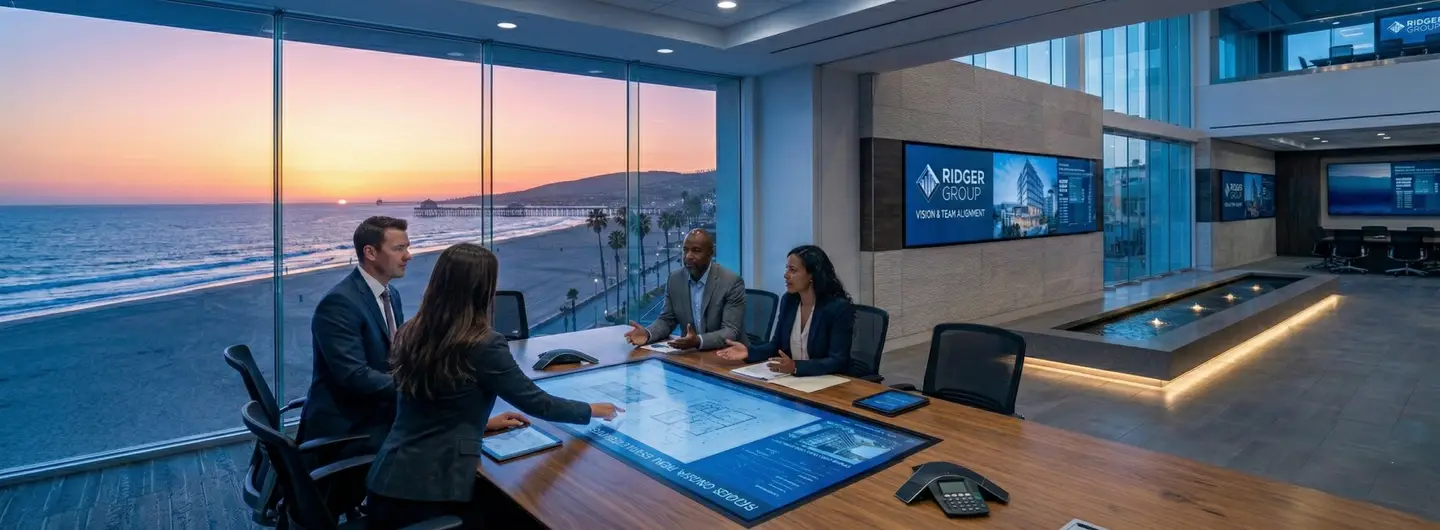
Ridger Group provides strategic real estate advisory across acquisitions, dispositions, leasing, development, and portfolio optimization. We integrate capital strategy, market intelligence, and operational execution to enhance asset value and align real estate decisions with broader enterprise objectives.
Investment Sales & Capital Advisory
Ridger Group advises institutional owners, REITs, private equity sponsors, family offices, and private investors on the acquisition and disposition of commercial real estate assets and portfolios — from single-asset transactions to complex portfolio restructurings and sales of non-performing or transitional assets.
Property Advisory
Our landlord advisory services extend beyond tenant placement. We provide market-driven leasing strategy designed to optimize occupancy, strengthen tenant credit quality, and stabilize cash flow. For tenants and owner-occupiers, we evaluate market alternatives, negotiate lease economics, and structure terms that protect flexibility and long-term cost efficiency.
Development & Project Advisory
Ridger Group provides development consulting and project oversight across pre-development, entitlement coordination, capital planning, and construction execution. We operate with technical and financial transparency — implementing structured reporting, cost controls, and risk management protocols.
Corporate Real Estate & Portfolio Strategy
We advise operating companies on aligning real estate footprint, facilities planning, and workplace strategy with long-term business objectives — providing geographic footprint analysis, occupancy cost optimization, portfolio restructuring, and integrated service coordination.
Integrated Execution
Our Capabilities
Capital Structuring
We identify and coordinate the appropriate capital solution for each asset: debt, equity, joint venture, or recapitalization, aligned with the client's risk profile and return objectives.
Transaction Execution
We manage the full transaction lifecycle — from initial positioning and marketing through negotiation, due diligence, and close — ensuring disciplined execution at every stage.
Asset Optimization
We evaluate operational performance, occupancy positioning, and capital improvement requirements to enhance asset value and strengthen long-term investment returns.
Risk & Compliance Oversight
We implement structured reporting, governance controls, and risk management protocols across every engagement, protecting investor capital and ensuring regulatory integrity.
Property Types
Asset Classes
Ridger Group advises across all major commercial real estate asset classes. Below is a reference overview of the primary property types and subcategories we work with.
Heavy Manufacturing. This category of industrial property is really a special use category that most large manufacturer's would fall under. These types of properties are heavily customized with machinery for the end user, and usually require substantial renovation to re-purpose for another tenant.
Light Assembly. These structures are much simpler than the above heavy manufacturing properties, and usually can be easily reconfigured. Typical uses include storage, product assembly, and office space.
Flex Warehouse. Flex space is industrial property that can be easily converted and normally includes a mix of both industrial and office space.
Bulk Warehouse. These properties are very large, normally in the range of 50,000-1,000,000 square feet. Often these properties are used for regional distribution of products and require easy access by trucks entering and exiting highway systems.
Classification. Office buildings are usually loosely grouped into one of three categories: Class A, Class B, or Class C. These classifications are all relative and largely depend on context. Class A buildings are considered the best of the best in terms of construction and location. Class B properties might have high quality construction, but with a less desirable location. And Class C is basically everything else.
Central Business District (CBD). Office buildings located in the central business district are in the heart of a city. In larger cities like Chicago or New York, and in some medium sized cities like Orlando or Jacksonville, these buildings would include highrises found in downtown areas.
Suburban Office. This classification of office space generally includes midrise structures of 80,000-400,000 square feet located outside of a city center. Cities will also often have suburban office parks which assemble several different midrise buildings into a campus-like setting.
Garden Apartments. Suburban garden apartments started popping up in the 1960s and 1970s, as young people moved from urban centers to the suburbs. Garden apartments are typically 3-4 stories with 50-400 units, no elevators, and surface parking.
Midrise Apartments. These properties are usually 5-9 stories, with between 30-110 units, and elevator service. These are often constructed in urban infill locations.
Highrise Apartments. Highrise apartments are found in larger markets, usually have 100+ units, and are professionally managed.
Greenfield Land. Greenfield land refers to undeveloped land such as a farm or pasture.
Infill Land. Infill land is located in a city and has usually already been developed, but is now vacant.
Brownfield Land. Brownfields are parcels of land previously used for industrial or commercial purposes, but are now available for re-use. These properties are generally environmentally impaired.
Strip Center. Strip centers are smaller retail properties that may or may not contain anchor tenants. An anchor tenant is simply a larger retail tenant which usually serves to draw customers into the property. Strip centers typically contain a mix of small retail stores like restaurants, dry cleaners, nail salons, etc.
Community Retail Center. Community retail centers are normally in the range of 150,000-350,000 square feet. Multiple anchors occupy community centers, such as grocery stores and drug stores.
Power Center. A power center generally has several smaller, inline retail stores, but is distinguished by the presence of a few major box retailers. Each big box retailer usually occupies between 30,000-200,000 square feet, and these retail centers typically contain several out parcels.
Regional Mall. Malls range from 400,000-2,000,000 square feet and generally have a handful of anchor tenants such as department stores or big box retailers.
Full Service. Full service hotels are usually located in central business districts or tourist areas, and include the big name flags like Four Seasons, Marriott, or Ritz Carlton.
Limited Service. Hotels in the limited service category are usually boutique properties. These hotels are smaller and don't normally provide amenities such as room service, on-site restaurants, or convention space.
Extended Stay. These hotels have larger rooms, small kitchens, and are designed for people staying a week or more.
Alternative & Special-Purpose Assets. The asset classes outlined above represent the primary segments of commercial real estate; however, investment activity extends well beyond traditional property types. Special-purpose assets — including self-storage facilities, car washes, entertainment venues, marinas, theaters, funeral homes, community centers, senior care facilities, and faith-based properties — often present unique operational and capital structuring considerations.
While Ridger Group maintains concentrated expertise across the principal asset classes identified, we selectively advise on alternative and special-purpose assets where strategic alignment, underwriting discipline, and capital structure expertise can materially enhance value and execution outcomes.
Real Estate Advisory
Strategic Real Estate Decisions. Disciplined Execution. Measurable Value.